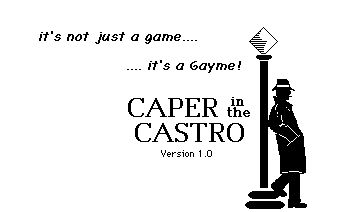
My research as of late most prominently focuses on videogames and their arguably queer relationships to analog texts and objects in post-digital environs. I posit “post-digital” (for my purposes, the condition of tension in contemporary technocultures between near total ubiquity of digital media and counter-cultural resurgence of interest in analog media) as a generatively queer concept at the heart of my ongoing project combining game studies with approaches from literary analysis, theories of affect and embodiment, and media archaeology. Post-digital as a concept calls into question the binaries defining computational techniques and technologies as completely unique markers of unquestioned progress in order to ask what and who gets left out and left behind by the neoliberal narrative of colonialist productivity above all else. I consider queer videogames, analyzed alongside the representational technologies that precede and influence them, as the best kinds of literary media for venturing possible answers to these queries. Arriving at this current articulation of my research agenda took me through forays into several different fields and comparative media forms from print literature to film to digital media and back again that still inform my work today.
I am now working to begin my first major research project, a full-length monograph I am currently calling Our Bodies Are Load Screens: Post-Digital Affect, Queer Materiality, and Gaming as Becoming. In this book, I will explore the ways in which videogames primarily by trans game designers can post-digitally queer material (dis)connections between virtual and corporeal. I argue that this unconventional linking of the seemingly disconnected is not just a design practice, but is further the living praxis of all trans game designers and trans people in general. So the post-digital “gaymes” trans people make are therefore representative of their embodied experiences through both forms and methods that effectively and affectively blur both. Just as trans people understand that bodies are not easily or even ever binarized (according to sex, gender, and the myriad medical and social framings for such designations), neither do the games they create and/or analytical approaches to others’ we take settle into stable categories or static mediations understood as only distinct from one another. Trans bodies are rather in an arguably constant state of becoming, across perceptions of before and after (pre- and post-transition) often articulated as a kind of “betweenness.” The “betweenness” of gaming as becoming therefore plays out through rhetorical strategies in games such as the digital representation of bookish artifacts, the agential elision of reading/writing/playing practices, and the intentional constraints of “retro” (or “rhetro”) pixelated game design—which yield affects with effects that are neither one thing and both. So as I put it, our bodies are load screens, and my project aims to show how the games made about, for, and by trans people implement post-digital affects that queer material connections we often assume as separate yet actually meet in the “betweenness” of gaming as becoming. I aim to publish the book as part of the Queer/Trans/Digital series at NYU Press and am already in contact with the editors who have expressed interest.
In addition to this research project, I already have plans for my next one on feminist interpretations of body horror cinema tentatively called All the World’s An Open Wound: Feminist Body Horror Fleshed Out From Skin to Screen, as well as further writing interests in “net”-nographic analysis of queer communities on the margins of social media.